Central Hospital Stories
SUBARAEducational
4.52.07K Reviews
- Version
- 1.9.5
- Installs
- 50.00M
- Age Rating
- Everyone
Screenshots
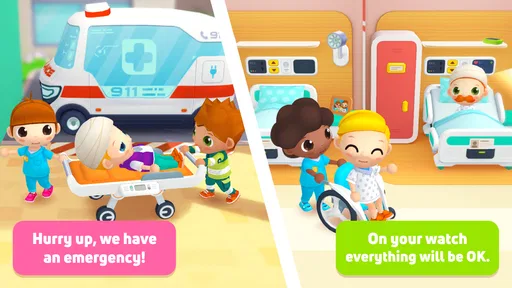
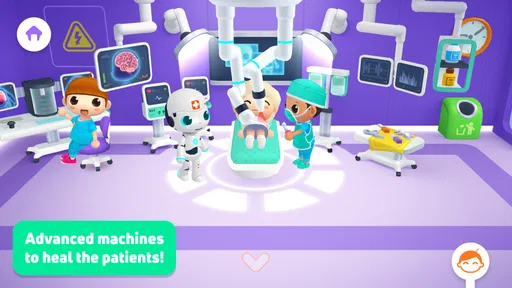
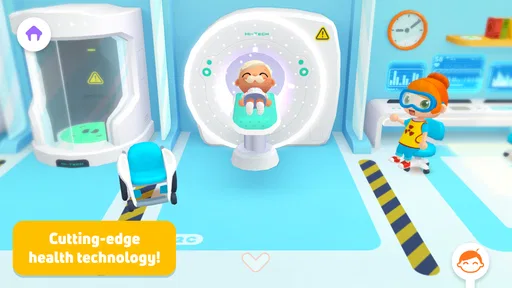
Our Review of Central Hospital Stories
 Analysis by Appyee
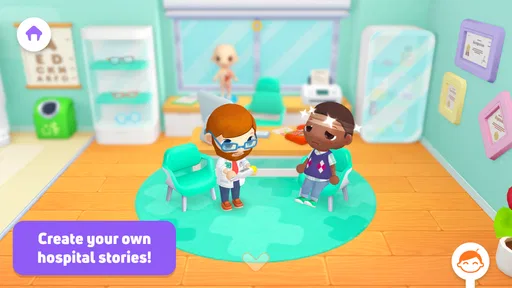
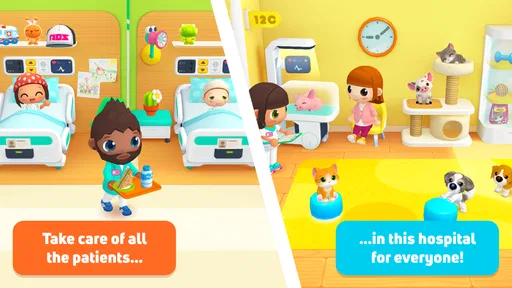
I spent time with Central Hospital Stories as a casual educational game, and my first impression was that it is less about winning than about making up small hospital stories. You can step into the role of a doctor, care for characters, explore the hospital setting, and decide what happens next. That open-ended approach makes it approachable for children, while adults may enjoy it as a calm activity to share rather than a game demanding constant attention.
The game comes from SUBARA and is free to start. It is rated Everyone, which fits its gentle presentation and family-friendly purpose. The store summary describes the central idea clearly: caring, exploring, and creating hospital adventures. In practice, that means the appeal depends heavily on whether you enjoy imaginative play. If you are looking for a medical simulation with detailed diagnosis, strict procedures, or a challenging progression system, this is not the experience I would choose.
How the hospital play works in everyday use
What I like most is the way the setting encourages role-play without requiring a complicated tutorial. A child can imagine being the doctor, nurse, visitor, or patient and then build a short scenario around the rooms and characters. One moment might involve checking on someone who has arrived at the hospital; another might turn into a family visit, a recovery scene, or a completely improvised story. The game leaves room for the player to decide what the hospital means in that moment.
That flexibility is also why the educational label needs to be understood properly. This is not a replacement for a learning app that teaches anatomy, first aid, or clinical vocabulary through structured lessons. Its educational value is more indirect. It can support communication, sequencing, empathy, and imaginative storytelling. A child can explain what a character needs, put events in an order, and practice caring language while playing.
I found it especially useful in short sessions. A parent can hand over the device for a few minutes of quiet play, or sit nearby and ask questions such as, “What should we do first?” and “How is the patient feeling?” Those prompts turn simple tapping and exploration into a conversation. Without that interaction, the game is still accessible, but its learning value is easier to overlook.
A realistic use case is a child who has recently visited a hospital and wants to replay the experience in a less intimidating way. The child can create a familiar scene, assign roles, and control the pace. That does not make the game medical therapy, but imaginative repetition can give a child a comfortable way to talk about what happened. I would still let the child lead the conversation rather than forcing the game to represent a real appointment exactly.
Why the open-ended design matters
Many children’s games provide a fixed sequence: complete a task, receive a reward, and move to the next level. Central Hospital Stories feels different because the main reward is the story itself. There is no need to rush through a challenge just to unlock the next moment of play. That makes it easier to use with siblings or a parent, because each person can suggest a different role and change the direction of the scene.
A useful trick is to give the player a small mission before starting. For example, ask them to welcome a new patient, show a visitor around, or make sure everyone in the scene has a job. This creates structure without taking away the freedom that makes the game appealing. Younger players may need those simple prompts, while older children can invent more detailed stories on their own.
Another strength is that the setting naturally supports cooperative play, even when only one person is holding the device. A parent can act as the patient or ask the child to explain each decision. Two children can take turns directing the story. This is more engaging than simply watching a child play, and it reveals whether the child is using the game creatively or just tapping through the available interactions.
The trade-off is that the same freedom can feel vague. Players who expect clear goals may ask what they are supposed to do next. There is no obvious reason to keep playing once the novelty of exploring the hospital has faded, unless the player enjoys inventing new scenarios. I see that as a design choice rather than a flaw, but it makes the game a weaker fit for children who need explicit objectives and visible progress.
What you receive without paying
The important cost detail is straightforward: the game is free to download and play, with optional in-app purchases listed from $3.49 to $4.49 per item. That gives families a chance to try the central experience before spending anything. I appreciate that arrangement for a game aimed at children, because parents can judge whether the open-ended format suits their child instead of committing to a purchase immediately.
Free access does not automatically mean unlimited value. The real question is whether the available play is enough for your household. If a child enjoys the hospital setting and keeps inventing new stories, the free version can provide worthwhile use. If the child explores everything quickly and then loses interest, paying for additional content may not change that basic issue. I would test the free experience first and only consider a purchase if the child is returning to it voluntarily.
The listed purchase range also means parents should treat the game as a try-before-you-decide product, not as a guaranteed complete package at no cost. I would avoid buying anything during a first session. Instead, watch how the child plays: do they create different situations, or do they repeat the same few actions? Do they use the characters to tell stories, or are they simply looking for a conventional level system? Those answers are more useful than the store description when judging value.
For a family that wants a quick, free activity, the entry cost is attractive. For someone comparing it with a paid educational game that offers lessons, exercises, or a defined curriculum, the comparison is less favorable. Central Hospital Stories delivers imaginative hospital play, not a complete medical education program. Its value comes from repeated creative use, and that depends on the player more than on a long progression path.
Small details that improve the experience
My first practical recommendation is to play with a story prompt rather than opening the game with no plan. “A visitor has arrived,” “someone needs help finding the right room,” or “the hospital is preparing for a busy day” gives the session a beginning and a reason for each action. This is a simple change, but it makes the game feel more purposeful and helps children practice explaining what they are doing.
Second, use the game as a speaking exercise. Ask the player to describe the patient’s problem, explain the next step, and say how the character might feel. The game’s hospital setting gives those questions a natural context. This works particularly well for children who enjoy pretend play but need encouragement to build longer stories instead of isolated actions.
Third, set a stopping point before the session begins. Open-ended games can make it difficult for a child to know when a story is finished, especially when there is no conventional level to complete. Agreeing on one final scene or one last patient visit keeps the activity manageable and prevents the game from turning into an endless request for more screen time.
There is also a useful contrast between playing alone and playing with an adult. Solo play gives children control and privacy to experiment with roles. Shared play creates more language, empathy, and explanation. I would not judge the game only by how entertaining it is when a child plays independently; its strongest educational benefit may appear when an adult asks thoughtful questions without taking control of the story.
Where the game falls short
The biggest limitation is the lack of a strong challenge loop. Players who enjoy collecting achievements, solving puzzles, or improving a score may find the experience too loose. The game is built around exploration and pretend play, so it does not offer the same kind of satisfaction as a quiz-based learning app or a management game with targets and consequences.
It is also not the right choice for a child who wants realistic medical knowledge. The doctor role is imaginative rather than professional. I would not use the game to teach how to diagnose an illness, respond to an emergency, or understand real hospital procedures. A dedicated science app, a child-friendly health book, or guidance from a qualified adult would be better for those goals.
The free-to-start model requires a little parental attention as well. Because optional purchases are available, I would check the device’s purchase controls before giving the game to a child. That is sensible for any children’s app with paid items. The cost is clear enough to understand, but the decision to spend should belong to the adult, especially when the child may not distinguish between free play and paid additions.
Another trade-off is replayability. The setting can support many stories, but not every player will use it that way. A child who prefers fixed rules may finish the available exploration and move on. In that case, a puzzle game, a structured educational title, or a game with short goals would probably deliver better value. I would recommend this title only when the player already enjoys dolls, role-play, and making up situations.
Who is likely to get the most value
This game is a strong match for younger players who like pretending to be adults at work, caring for characters, and exploring familiar community settings. It can also work well for siblings who enjoy taking turns, although an adult may need to help them agree on roles. The Everyone rating makes it suitable for a broad family audience, but suitability is not the same as universal appeal: some children will find the lack of goals relaxing, while others will find it boring.
Parents can get extra value by treating it as a conversation starter. After a session, ask the child to retell the story without the device. What happened first? Who needed help? What would happen next? That turns a short game into a broader storytelling activity and helps reveal whether the child understood the scenario or was only interacting with objects at random.
Teachers and caregivers could also use it as an informal role-play prompt, provided they are comfortable with its imaginative rather than instructional approach. A group might invent a hospital scenario and then discuss kindness, taking turns, or how to welcome someone who feels nervous. I would not present it as a lesson about healthcare, but it can support social and language activities around those themes.
Older children who want more complexity may outgrow it quickly. The same is true for adults seeking a serious hospital game. The title’s appeal is its accessibility, not depth of simulation. If you want resource management, medical puzzles, or a demanding strategy layer, another category of game will serve you better.
Device fit and current state
The game was released on April 13, 2019, and the current version is 1.9.5. It supports devices running Android 7.0 or later. That makes the minimum requirement relatively approachable for people using older compatible Android hardware, although actual comfort will still depend on the device’s screen, storage, and general condition.
Its popularity is substantial, with over 50 million installs, a 4.5 average from around 158 thousand ratings, and roughly 2.1 thousand written reviews. Those figures suggest that the concept has reached a large audience and that many players respond positively to it. They do not guarantee that every child will enjoy open-ended play, so I would still use the free entry point to make a personal decision.
I would also remember that popularity can hide different expectations. Some families may use the game for imaginative play, while others may expect a teaching tool because it sits in the educational category. Before installing it for a child, explain what it is: a hospital-themed role-play game with educational value through storytelling and care, not a course in medicine.
My recommendation after weighing the value
I recommend Central Hospital Stories when the goal is calm, creative play and the child enjoys inventing scenes. The free starting point makes it easy to test, and the optional purchases let families decide whether the experience deserves more spending. I would begin with several short sessions, preferably with a prompt or a parent joining in, before judging its replay value.
I would skip it for players who need clear missions, competitive feedback, or factual medical instruction. I would also avoid paying simply because the child likes the theme. The purchase makes sense only when the child is already using the available experience repeatedly and creating new stories rather than asking for more content out of boredom.
Overall, SUBARA has made a gentle educational game whose best feature is the freedom to turn a hospital setting into a personal story. Its value is strongest when the player supplies the imagination. That is both its charm and its limitation: it can encourage empathy, language, and creative thinking, but it will not provide the structure or depth of a traditional lesson-based app. For the right child, the free version is worth trying; for everyone else, the lack of goals is a clear reason to choose a different kind of game.
Verdict
Strengths of Central Hospital Stories
- Bright, child-friendly graphics make the hospital easy to explore.
- Open-ended play lets children create their own medical stories.
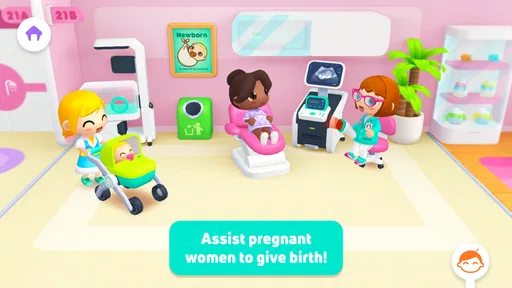
- Many rooms and characters encourage imaginative role-playing.
- Simple touch controls are suitable for younger players.
- Offline play allows access without a constant internet connection.
Limitations of Central Hospital Stories
- Some areas and characters require additional purchases to unlock.
- Gameplay may feel repetitive after the main locations are explored.
- Limited challenge may not appeal to older children or adults.
- Frequent animations can make quieter play difficult for some users.
- Device storage usage may increase with updates and extra content.
Other Releases by SUBARA
View All
Urban City Stories: World Game
Educational4.5

Sweet Home: Games for kids
Educational4.6

Stories Life: Kids World Game
Educational4.7
Similar Picks in This Category
View All
Little Panda Policeman
BabyBus4.0

Monster Trucks Game for Kids 2
Raz Games4.1

Little Panda's Chinese Recipes
BabyBus4.4

Little Panda's Restaurant
BabyBus4.4

Little Panda's Ice Cream Games
BabyBus4.3

Baby Panda Care
BabyBus3.8
Frequently Asked Questions
What is Central Hospital Stories?
Central Hospital Stories is a family-friendly role-playing and storytelling game in which children can explore a colorful hospital, interact with different characters, and create their own medical-themed scenarios. Instead of following a strict mission structure, players can freely move between rooms, discover objects, dress characters, and invent stories involving doctors, nurses, patients, and visitors.
Is Central Hospital Stories suitable for children?
The game is designed primarily for children and offers simple controls, bright visuals, and open-ended play without complicated instructions. It generally avoids realistic medical drama and presents hospital activities in a gentle, cartoon-style way. However, parents should still review the available content and settings, especially if the child is sensitive to hospital environments or unfamiliar medical equipment.
Can Central Hospital Stories be played offline?
Much of the core gameplay can usually be enjoyed without a constant internet connection because the main hospital locations and interactive activities are included in the app. An internet connection may still be required for downloading the game, receiving updates, restoring purchases, or accessing certain optional content. Availability can vary depending on the device and current version.
Is Central Hospital Stories free to download?
Central Hospital Stories may be available as a free download, but access to the complete hospital experience can depend on in-app purchases or a paid version. Some rooms, characters, outfits, or interactive objects may be restricted until additional content is unlocked. Before downloading, parents should check the store listing, pricing, and purchase settings to understand what is included.
What devices are compatible with Central Hospital Stories?
Central Hospital Stories is intended for compatible Android and iOS smartphones or tablets, but exact requirements can change as the game receives updates. Performance depends on the device’s operating system, available storage, memory, and screen size. For the smoothest experience, download it from the official Google Play Store or Apple App Store and verify the listed compatibility details first.
Play our best games!


